Research that builds the case. Work that acts on it.
Who bears the cost when AI development moves faster than protection? Samia's research answers that question with primary evidence, policy recommendations, and a clear demand for change.
100+
AI companion apps analyzed
70+
Experts on EDSAFE task force
3
International bodies engaged
The risky new world of tech's friendliest bots
Media feature · UNICEF Innocenti · 2025
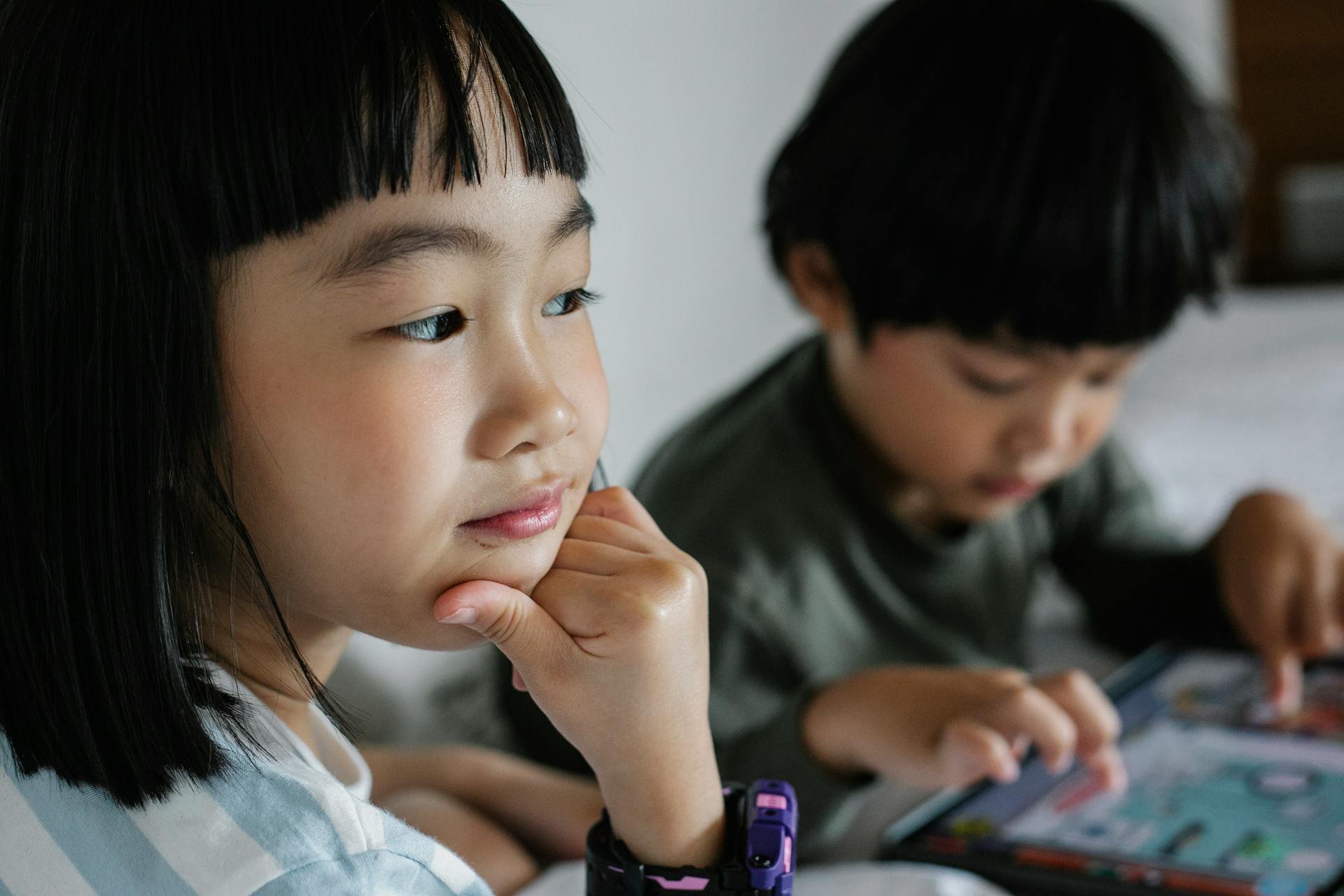
UNICEF's Office of Research Innocenti asked Samia to explain what she found inside the AI companion apps that growing numbers of children use as friends, emotional supports, and confidants. The apps market themselves as perfect emotional matches, available 24/7, fully customizable, and always validating. That promise has a cost. Children whose critical thinking, social skills, and understanding of real relationships are still forming are the ones paying it.
The access findings are stark. Most apps relied on self-declared age or open guest access, and several required no verification at all. When Samia told the apps she was a child, most continued without adjustment. One acknowledged legal prohibitions but proceeded regardless. Only one showed genuine child protection measures. Samia notes that result as proof that effective safeguards are buildable. The industry has simply chosen not to build them.
AI companions
Child online safety
Age verification
Gender bias in AI
S.A.F.E. by design: policy, research, and practice recommendations for AI companions in education
Task force report · EDSAFE AI Alliance · 2025
Samia served on the EDSAFE AI Alliance task force alongside more than 70 educators, technologists, policymakers, researchers, and youth rights advocates. Over four months, the group examined a problem that has been hiding in plain sight. AI companion tools are entering classrooms on school-provided devices, without oversight, parental involvement, or institutional guidance. Students are using them for deeply personal conversations the school system never anticipated.
The stakes documented in the report are serious. Research has established a direct link between AI companion interactions and instances of youth harm and suicide. About one in three high school students reports using AI companions for personal reasons on school-issued devices. The report responds with direction that is concrete enough to act on: recommendations for K-12 leaders and policymakers at every level, design guidelines grounded in learning science, and a roadmap for the research still needed.
AI education
AI companion design
Student wellbeing
EdTech policy
AI Friend? Risks, Implications, and Recommendations on Generative AI for Children
Master's thesis · Geneva Graduate Institute · 2024
Samia spent a year inside the AI companion ecosystem, analyzing over 100 apps accessible to children, with eleven examined in depth. The research applies the established 4Cs framework of online risks to map what generative AI and companion apps are actually doing to young users, behind the friendly interface and the promise of emotional support.
The findings are specific. Problematic social dynamics are not edge cases. They are embedded in the design choices developers make. Children face real risks of manipulation, mass processing of sensitive personal data, and an almost total absence of accountability for harmful AI-generated content. The thesis closes with an integrated framework for change, directed at the actors who have the most power to drive it.
Generative AI
Child safety
AI companions
Data privacy
Children's experiences in the digital environment: the case for urgent, coordinated action
Research proposal · 2024
This proposal does something most research on child online safety does not: it moves directly from evidence to a plan. It draws on documented cases of predator exploitation, dangerous viral trends, parental oversharing, and emerging AI harms to map the scale of the problem. Then it proposes four concrete responses.
The first is a public manifesto that declares an end to the era of neglecting children in digital spaces. The second is a media production that makes the risks visible to audiences beyond policy circles. The third is original research on how AI and digital technologies affect child development over time. The fourth is direct engagement with technology companies to make child protection a design standard rather than an afterthought.
The evidence already exists. What has been missing is the collective will to act on it.
Child online safety
Digital risk
AI and child development
Child protection policy
Navigating Artificial Intelligence From A Human Rights Lens: Impacts, Tradeoffs, And Regulations For Groups In Vulnerable Situations
Applied research project · Geneva Academy partnership · 2023
Conducted with the Geneva Academy alongside researchers Adriana Ramírez and Ishita Bhatia, this study identifies a central challenge in AI governance: understanding how AI impacts the human rights of vulnerable groups, including children. The gap between how fast AI develops and how slowly protection catches up is a political and institutional failure. Its costs fall heaviest on the people least able to absorb them.
Drawing on the AIAAIC incident repository, human rights instruments, AI regulations across jurisdictions, and expert interviews, the research traces a decade-long pattern. AI incidents have risen sharply. Women, children, persons with disabilities, and racial and ethnic minorities are disproportionately affected. The conclusion is precise: human rights frameworks must become central to AI governance, not a consideration added after the architecture is set.
Human rights
AI governance
Vulnerable groups
Inclusive regulation
Samia's research is available to read, share, and build on. If it connects to work you are doing in policy, technology, or education, she is open to conversation.